
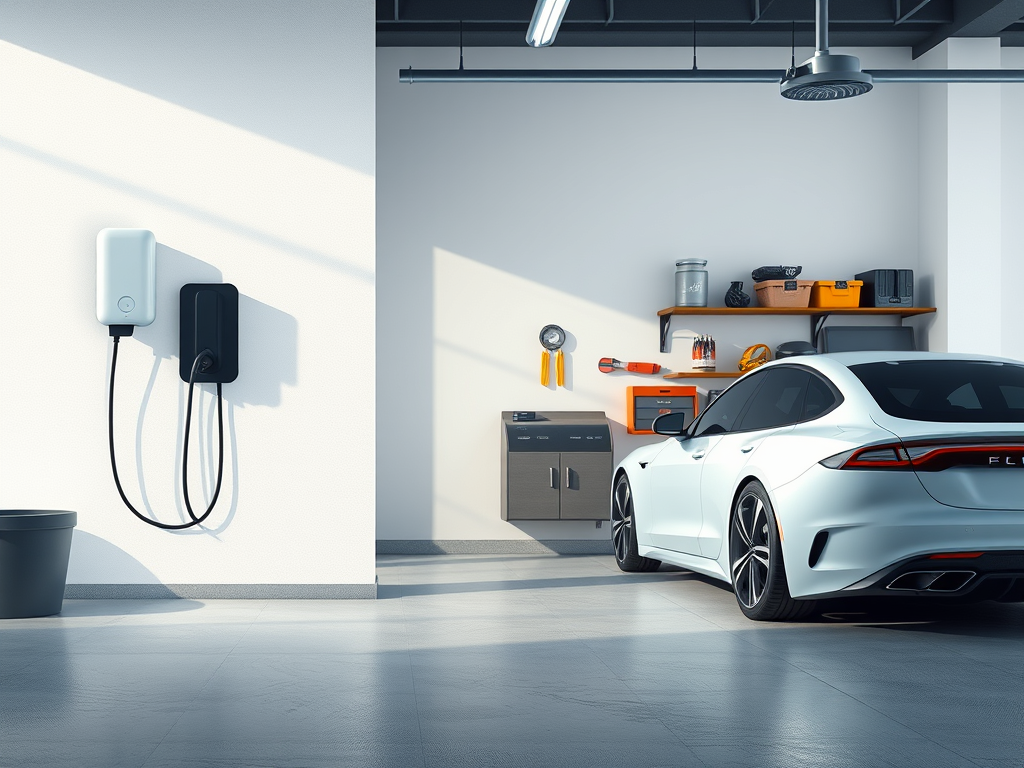
As electric vehicles (EVs) become more common, many homeowners are considering installing Level 2 chargers for faster and more efficient charging. At Empowered Electric, we specialize in EV charger installations and help customers determine the best option for their needs. The two main installation methods are hardwired chargers and plug-in chargers using a NEMA 14-50 outlet. While both have their advantages, there are important differences in capacity, durability, and safety that homeowners should understand.
Hardwired EV Chargers
A hardwired EV charger is permanently connected to your home’s electrical system using #6 wire and a 60-amp breaker. This setup allows for 48 amps of continuous charging, providing faster and more reliable charging for your EV.
Advantages of a Hardwired Charger:
- Higher Charging Capacity: Can provide up to 48 amps of continuous charging, maximizing your EV’s charging potential.
- More Durable and Reliable: Hardwired chargers eliminate plug connections, reducing wear and the chance of loose connections.
- No Need for GFCI Protection: Unlike a plug-in installation, hardwired chargers do not require a GFCI breaker, avoiding unnecessary tripping and additional installation costs.
- Meets NEC Code Requirements for Permanent EV Chargers: A dedicated circuit with a permanently mounted EV charger is the preferred method for long-term reliability.
Plug-In EV Chargers (NEMA 14-50 Outlet)
A plug-in EV charger uses a NEMA 14-50 outlet connected to a 50-amp breaker, allowing for 40 amps of continuous charging. While this is a common setup, it comes with certain drawbacks.
Considerations for Plug-In EV Chargers:
- Lower Charging Capacity: Limited to 40 amps of continuous charging due to NEC requirements.
- Requires a GFCI Breaker: According to NEC 210.8(A)(2), garages are considered damp locations, meaning any installed outlet must have GFCI protection for personnel safety. This increases installation costs and may cause nuisance tripping.
- Plugs Degrade Over Time: Frequent plugging and unplugging can wear down the outlet, leading to poor connections, overheating, and potential failures.
- Not as Robust as a Hardwired Installation: A hardwired connection ensures a stable electrical supply, whereas plug-in connections can loosen over time, causing inefficiencies and safety risks.
Which Option Is Best for You?
If you want a long-term, high-performance, and reliable EV charging solution, a hardwired installation is the best choice. It provides higher continuous charging capacity, eliminates wear and tear from plug use, and avoids the added cost of a GFCI breaker. However, if flexibility and portability are a priority, a NEMA 14-50 plug-in charger may be an option—just keep in mind the extra costs and maintenance involved.
At Empowered Electric, we ensure your EV charger is installed safely, efficiently, and up to code. Whether you choose a hardwired charger or a plug-in option, we’re here to help! Contact us today to discuss your EV charging needs.
#EVChargerInstallation #HardwiredVsPlugIn #ElectricalSafety #EmpoweredElectric #EVReady