
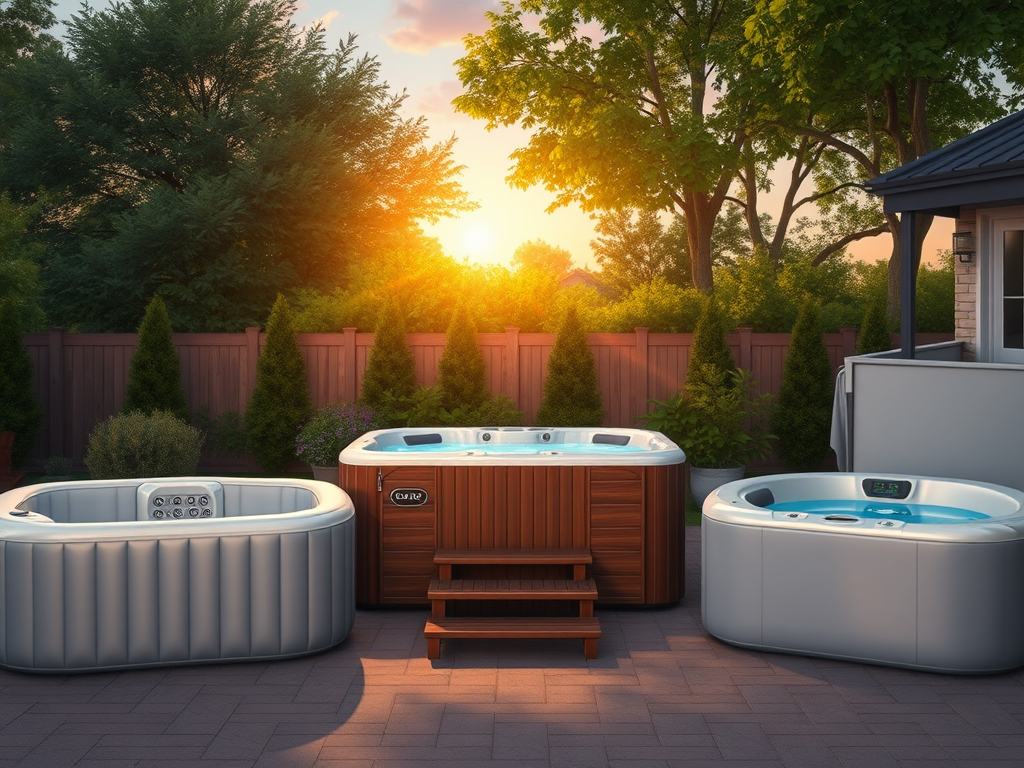
A hot tub can be a fantastic addition to your home, offering relaxation, health benefits, and a touch of luxury. However, selecting the right hot tub and understanding its electrical and installation requirements can be challenging. This guide will help you navigate the different types of hot tubs and the necessary steps to take when considering a purchase.
Types of Hot Tubs
- Inflatable Plug-and-Play Hot Tubs
- Power Requirements:
- Operates on a standard 120-volt outlet.
- Requires a dedicated GFCI outlet for safety.
- Can be plugged in without special wiring, making it easy to set up.
- Advantages:
- Affordable and portable.
- Easy to set up and maintain.
- Ideal for renters or those wanting a temporary hot tub.
- Limitations:
- Limited heating and jet power compared to larger models.
- Less durable and not ideal for long-term use.
- Power Requirements:
- Standard Hard-Shell Hot Tubs (240-Volt)
- Power Requirements:
- Typically requires a 240-volt, 50-amp dedicated circuit.
- Must be connected to a GFCI-protected breaker for safety.
- Advantages:
- More powerful heating and jets.
- Durable and designed for long-term use.
- Available in various sizes and configurations to fit your needs.
- Installation Considerations:
- Requires professional electrical wiring.
- May need a concrete pad or reinforced deck for support.
- Power Requirements:
- Swim Spas
- Power Requirements:
- Often requires a dedicated sub-panel to handle higher amperage (up to 60-amp or more).
- Must have GFCI protection.
- Advantages:
- Combines the benefits of a hot tub and a swimming pool.
- Ideal for exercise, relaxation, and hydrotherapy.
- Installation Considerations:
- Requires a larger space and professional installation.
- May need additional structural support and electrical upgrades.
- Power Requirements:
Electrical Codes and Safety Requirements
Proper installation of a hot tub is critical to ensure safety and compliance with electrical codes. Key requirements include:
- Distance from Power Sources
- Hot tubs must be installed at least 5 feet away from electrical outlets, panels, or other power sources to prevent water-related electrical hazards.
- Disconnect Location
- The disconnect switch for the hot tub must be visible and accessible within 25 feet of the hot tub.
- This allows for quick power shutoff in case of an emergency.
- GFCI Protection
- A GFCI (ground-fault circuit interrupter) device is required to protect the hot tub’s electrical system.
- For plug-and-play hot tubs, the GFCI outlet should be weather-resistant and dedicated.
- For hardwired hot tubs or swim spas, the GFCI breaker must be part of the electrical panel or sub-panel.
- Nearby GFCI Outlet
- A GFCI-protected outlet must be installed within 6 to 10 feet of the hot tub but no farther than 25 feet, as per the National Electrical Code (NEC).
Steps to Take When Purchasing a Hot Tub
- Determine Your Needs and Budget
- Consider the intended use: relaxation, exercise, hydrotherapy, or entertaining guests.
- Set a budget, factoring in installation costs, electrical upgrades, and ongoing maintenance.
- Evaluate Your Space
- Measure the available area and ensure adequate clearance for installation, maintenance, and electrical compliance.
- Verify the structural capacity of the installation site, whether it’s a deck, patio, or concrete slab.
- Understand Electrical Requirements
- Work with a licensed electrician to evaluate your home’s electrical system.
- Determine if your existing setup can support the hot tub or if upgrades (e.g., sub-panel, dedicated circuit) are necessary.
- Choose the Right Type
- Inflatable hot tubs are great for portability and ease of use but may lack durability.
- Standard hard-shell hot tubs offer superior performance and longevity but require professional installation.
- Swim spas provide versatility but demand significant space and resources.
- Ensure Code Compliance
- Confirm that the installation meets all local building and electrical codes.
- Obtain necessary permits for electrical work or structural modifications.
- Plan for Maintenance
- Regularly test and balance water chemistry to keep your hot tub safe and clean.
- Inspect electrical components periodically for wear or damage.
Why Choose Empowered Electric for Your Hot Tub Installation?
At Empowered Electric, we specialize in ensuring that your hot tub installation is safe, efficient, and compliant with all local codes. Here’s how we can help:
- Conduct a thorough assessment of your home’s electrical system.
- Install dedicated circuits, GFCI protection, and sub-panels as needed.
- Ensure your hot tub is properly grounded and meets NEC standards.
- Provide expert guidance to help you choose the best hot tub for your needs.
Conclusion
Choosing and installing a hot tub is an exciting investment, but it’s important to prioritize safety and compliance with electrical codes. Whether you’re opting for a simple plug-and-play model, a hard-shell spa, or a luxurious swim spa, careful planning and professional installation are key to enjoying your hot tub for years to come.
Contact Empowered Electric today to schedule a consultation and let us handle all your hot tub electrical needs with precision and expertise!